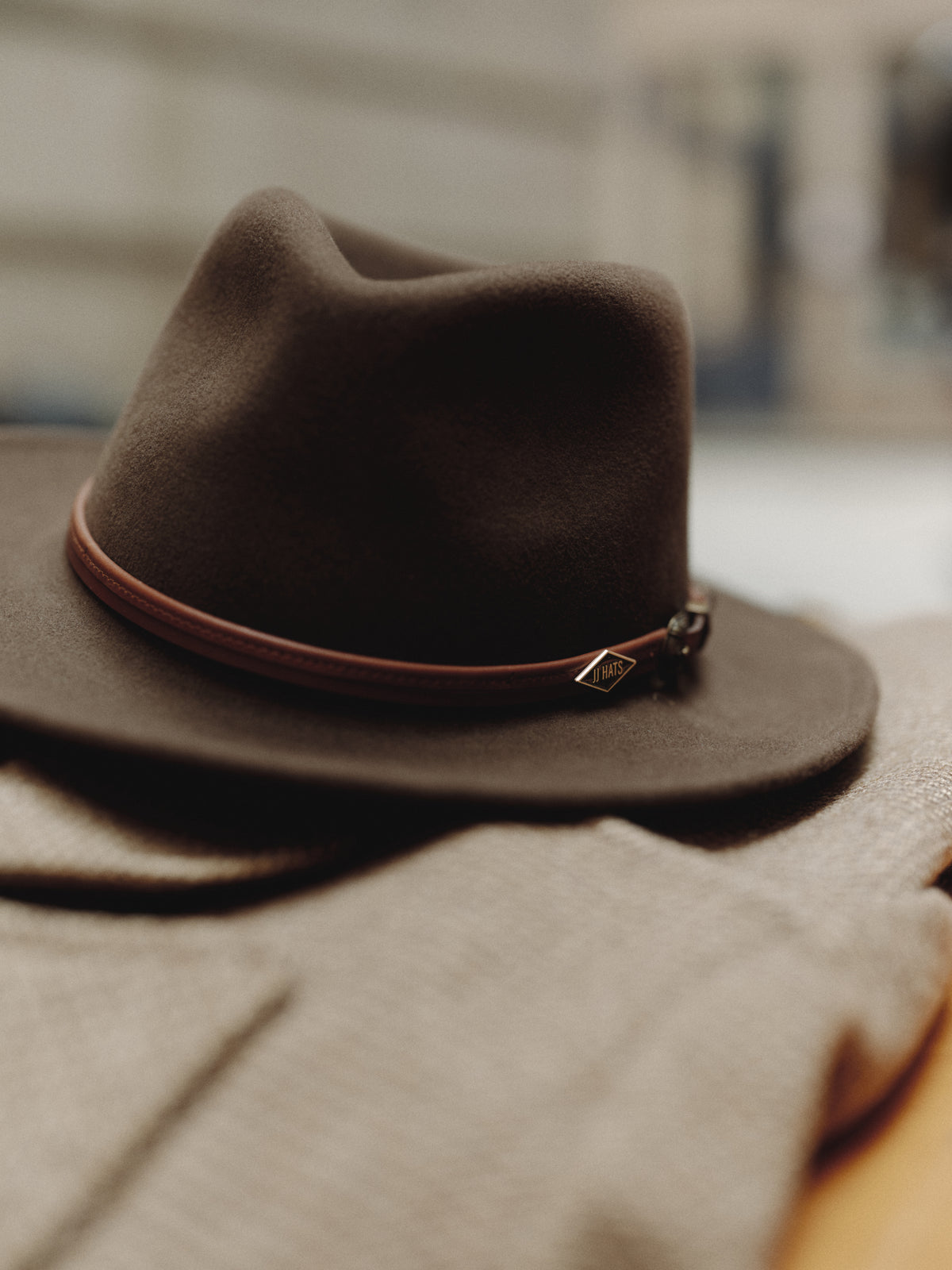
What is a bush hat? It is a soft, wide-brimmed hat with a ventilated crown and, in most cases, a chin strap, designed to protect the face, ears and neck from sun and rain alike. Born in the armies and among the cattle farmers of hot regions, it has become the reference headwear for travel, hiking and life outdoors.
At JJ Hat Center, luxury hatters, we consider it one of the most functional hats there is: every detail of its construction answers a specific need. Here is what defines it, where it comes from, what sets it apart from the cowboy hat and how to choose one.
What is a bush hat? The hatter's definition
The word "bush" refers to the dry, sparsely vegetated expanses of hot countries, far from the cities. The hat that bears this name was conceived for these landscapes: long hours outdoors, an overhead sun, sudden downpours, wind and dust.
A bush hat can be recognised by five features:
- A wide brim that runs all the way round the head, shading the face as well as the neck and ears.
- A medium-height crown, often pinched or slightly creased, which lets air circulate above the head.
- Eyelets or a ventilation band to let heat escape.
- A chin strap, an adjustable cord that holds the hat in place in strong wind or lets you wear it on your back.
- A hard-wearing material: leather, waxed cotton, heavy canvas or soft felt.
Some models also feature press studs that allow the brim to be turned up on one or both sides, a direct legacy of their military past.
Where does the bush hat come from?
The bush hat is first and foremost a working hat, adopted by those who worked or served in harsh climates. Two histories intersect: that of the armies and that of the cattle farmers.
A military heritage
From the 19th century onwards, several armies deployed in the tropics abandoned rigid headwear in favour of soft, wide-brimmed hats. In France, the canvas "chapeau de brousse" was part of the kit of troops serving overseas in the mid-20th century; its brim could be turned up with press studs. During the Vietnam War, American soldiers wore a close canvas cousin, the boonie hat.
The Australian bush hat
It was in Australia that this hat found its true home. In the outback – which Australians also call the bush, the very word that gave the hat its name – cattle farmers needed headwear able to stand up to sun, dust and storms. The Australian bush hat is therefore wide, sturdy and often made of felt or leather.
Its military version, the slouch hat, is worn with the brim turned up on one side; it has become one of the emblems of the Australian Army. The civilian version, meanwhile, has travelled the world with explorers and travellers.
The Australian house Barmah carries on this tradition with leather hats – cowhide or kangaroo, a leather renowned for being fine, light and hard-wearing all at once – some of which are designed to be folded into a bag. Barmah is among the most viewed brands in our selection.
What is the difference between a bush hat and a cowboy hat?
The two are often confused, as both have a wide brim and pastoral origins. Yet the difference between a bush hat and a cowboy hat lies as much in the shape as in the history.
| Criterion | Bush hat | Cowboy hat |
|---|---|---|
| Origin | Australia and the armies of hot countries | American West, second half of the 19th century |
| Crown | Medium height, soft, often ventilated | Tall, deeply creased and pinched |
| Brim | Flat or slightly angled, soft | Stiff, turned up at the sides |
| Materials | Leather, waxed cotton, canvas, soft felt | Firm felt or straw |
| Chin strap | Very common | Less common |
| Spirit | Travel, hiking, the outdoors | Western style, horse riding |
In short, the bush hat favours protection all the way round the head and ease of transport, whereas the cowboy hat makes a statement with its silhouette. If the latter appeals to you, discover our cowboy hats and our guide How to wear a cowboy hat.
Men's bush hat: how to choose the right one?
A men's bush hat is chosen according to three criteria: material, brim width and size. Our collection of outdoor hats brings together the models designed for these uses.
The material
- Leather: the most hard-wearing. It develops a patina over the years and withstands intensive use.
- Waxed cotton: the best answer to downpours, as water beads on its surface.
- Wool felt: structure and warmth for the transitional seasons.
- Cotton canvas: the lightest and most breathable in intense heat.
The brim and the crown
The wider the brim, the more generous the shade; a medium-width brim, however, remains more discreet in town and more stable in strong wind. A crown fitted with eyelets or a ventilated band makes a real difference on hot days.
The size
A bush hat should hold without squeezing: it sits straight, roughly a finger's width above the eyebrows, and should not move when you tilt your head. The chin strap takes over when the wind picks up.
The houses to know
Besides Barmah, Stetson – the number one brand at JJ Hat Center, accounting on its own for almost three quarters of our sales over the past twelve months – offers a wide range of outdoor hats. Its most versatile models can be found among our traveller hats, whose understated shape moves effortlessly from the trail to the city.
How to wear and care for a bush hat?
The bush hat pairs naturally with raw materials: linen, canvas, denim, a work jacket or a safari jacket. In town, a model in brown leather or in soberly coloured waxed cotton goes just as well with a pea coat as with a quilted jacket.
When it comes to care, a few simple steps are enough:
- Brush off dust with a soft brush, always when dry.
- Let a wet hat dry in the open air, away from any source of heat.
- Nourish the leather once or twice a year with a suitable care product.
- Only fold models that are expressly designed for it.
For transport, you will find our detailed advice in The art of travelling with your hat.
Frequently asked questions about the bush hat
What is a bush hat?
A bush hat is a soft, wide-brimmed hat with a ventilated crown and, in most cases, a chin strap, designed to protect the face, ears and neck from sun and rain alike. Born in the armies and among the cattle farmers of hot regions, it is today a companion for travel, hiking and the garden.
What is the difference between a bush hat and a cowboy hat?
The cowboy hat has a tall, deeply creased crown and a stiff brim turned up at the sides; the bush hat has a lower crown and a flatter, softer brim designed to shade all the way round the head. The former comes from the American West, the latter from Australia and the armies of hot countries.
What is an Australian bush hat?
The Australian bush hat is the headwear of the outback's cattle farmers: a wide-brimmed hat in felt or leather, made for sun, dust and downpours. Its military version, the slouch hat with one side of the brim turned up, is one of the emblems of the Australian Army.
Which material should you choose for a men's bush hat?
Leather suits intensive use and develops a patina over time, waxed cotton offers the best protection against downpours, wool felt provides structure in the transitional seasons and cotton canvas remains the lightest option in intense heat. The right choice depends on the climate and how you intend to wear it.
Can you fold a bush hat into a suitcase?
Only if it was designed for it: some models in soft leather or canvas are described as packable and regain their shape once taken out of the bag. A felt hat or one with a reinforced brim, on the other hand, should travel flat or be worn on the head.
Key takeaway: the bush hat is a protective hat before it is a style accessory. Well chosen, in a fine material, it will accompany you for many years, from the trail to the garden.