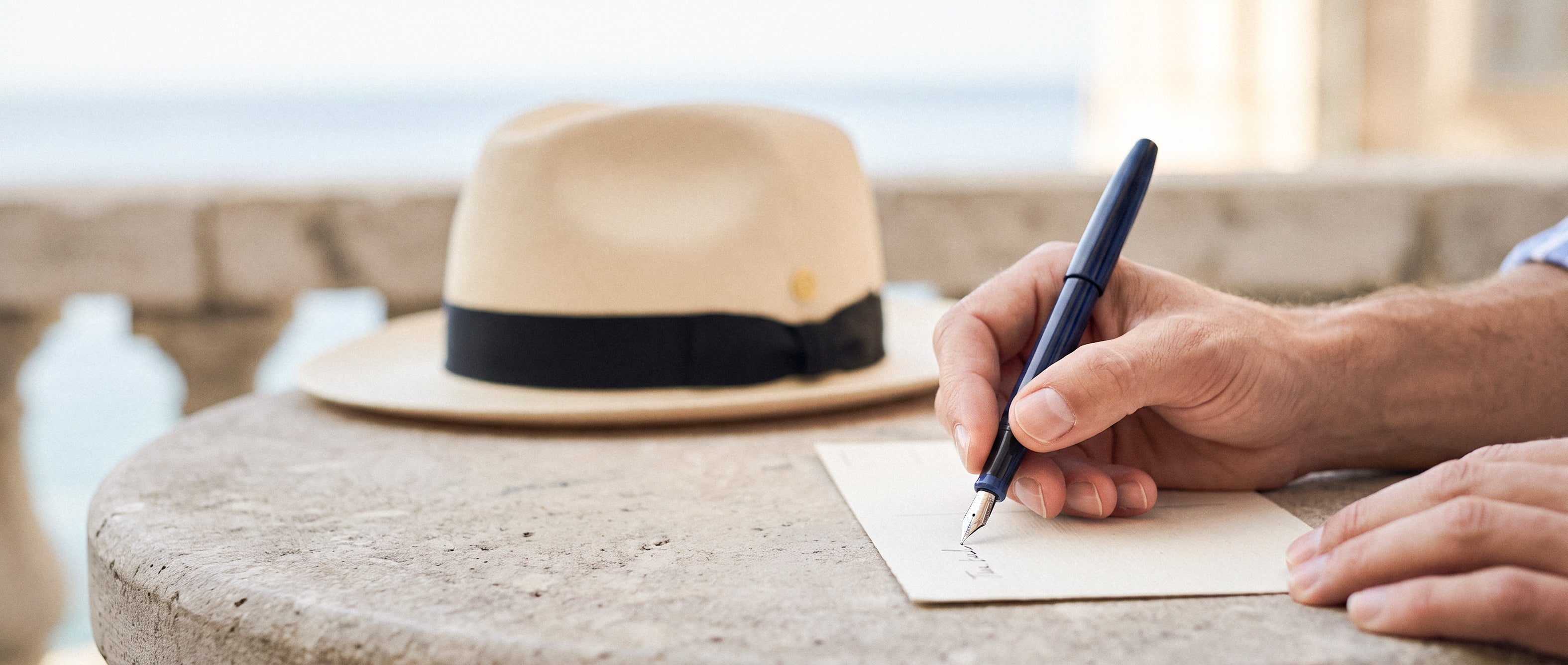
Which hat suits which face? The hatter's rule is simple: choose a shape that balances the lines of your face, never one that exaggerates them — a round face gains structure from an asymmetric brim or a taller crown, while a face with pronounced angles is softened by rounded brims. At JJ Hat Center, a luxury hatter, this principle guides every piece of style advice, from the most classic felt hat to the most contemporary cap.
Which hat suits which face? It all starts with your face shape
Before choosing a hat or a cap, it helps to know your face shape. In front of a mirror, with your hair pulled back, compare three widths – forehead, cheekbones and jawline – as well as the overall length of your face. Five main types come up most often in hat-making:
- Oval: balanced length and width, jawline slightly narrower than the forehead.
- Round: full cheeks, similar width and length, few angles.
- Square: forehead, cheekbones and jawline of similar width, clean lines.
- Long: face noticeably longer than it is wide, high forehead.
- Heart-shaped: wide forehead, narrow, pointed chin.
Oval face: the shape that allows (almost) every freedom
This is the most versatile face shape: its balanced proportions suit a wide-brimmed felt hat just as well as a more understated trilby or a bowler hat with its round, structured silhouette. The only point to watch: avoid an overly tall crown, which would needlessly lengthen the face.
Round face: play with angles
To offset full cheeks, favour shapes that add height and clean lines: a felt fedora with a pinched crown, worn slightly tilted, instantly gives your features structure. The trilby, with its shorter, upturned brim, has the same effect while remaining very easy to wear every day. Conversely, a perfectly round shape such as certain berets emphasises roundness rather than correcting it: this type of headwear is best kept for longer faces.
Square face: choose softness
A strong jawline is best balanced by curves. The bowler hat, with its perfectly rounded crown, visually softens the angles of the lower face – one of the reasons for its enduring success in classic hat-making. The bucket hat, worn with a soft, medium-width brim, plays the same role in a more relaxed register. Avoid overly geometric shapes, however, which only reinforce the severity of your features.
Long face: shorten the line of the face
When the face is noticeably longer than it is wide, the aim is to add width and reduce perceived height. A wide-brimmed bucket hat worn straight, or a flat cap set level on the head, visually shortens the face. By contrast, the tall crowns of some felt hats and trilbies tend to accentuate length: if you are nonetheless drawn to a felt hat, choose a low crown and a generous brim to compensate.
Heart-shaped face: balance a wide forehead
A wide forehead and a narrow chin call for a shape that visually broadens the lower face without weighing down the upper part. A bucket hat with a medium, soft, slightly downturned brim remains the safest choice. A short-brimmed trilby also works well, provided you do not wear it too far back, which would expose an already prominent forehead even more.
And caps: which cap suits which face?
The logic is the same as for hats, with a few nuances specific to caps. On an oval or square face, the classic flat cap is almost always right: its clean line gives the face structure without ever overstating it. On a round face, opt for a longer peak and a slightly domed crown, which lengthen the face rather than rounding it further. On a long face, a short-peaked cap worn straight avoids accentuating height. At JJ Hat Center, our caps cover precisely this range of cuts, from the most classic to the sportiest.
What our sales reveal about the most popular shapes
Unsurprisingly, the two most versatile families across face shapes are also among the most sought-after in our house: flat caps top the sales at JJ Hat Center, followed very closely by felt fedoras, with a gap of only around ten per cent between the two. It is this versatility, more than passing fashion, that explains their enduring popularity. As for brands, Stetson holds first place in sales across all categories at JJ Hat Center, far ahead of other hat-making names: a solid reference whenever you are choosing a felt hat or trilby made to last.
The hatter's advice for a lasting choice
A well-chosen hat should also be tested by actually wearing it, not just in front of a mirror: walk, turn your head, look at the effect in profile. Our hat guide sets out the basics for choosing the right size and fit, regardless of face shape. If a fedora tempts you, our article how to wear a fedora explains how to adjust the tilt and the snap of the brim to suit your features. In every case, one rule applies to all faces: the brim of the hat should never extend beyond the width of your shoulders, or it will throw your whole silhouette off balance.
Frequently asked questions
Which hat suits a round face?
A felt hat with a pinched crown or a short-brimmed trilby provides the height and angles that give structure to a round face.
Which hat suits a square face?
Round, soft shapes such as the bowler hat or the bucket hat soften a strong jawline.
Which cap suits which face?
The classic flat cap suits oval and square faces; on a round face, choose a long peak and a slightly domed crown to lengthen the silhouette.
How can I tell what face shape I have?
With your hair pulled back, compare the width of your forehead, cheekbones and jawline, as well as the overall length of your face: the ratio between these measurements determines your face shape.
Does the bowler hat suit every face?
It particularly flatters oval and square faces thanks to its round crown; on a face that is already very round, a more structured shape such as the fedora is the better choice.