
History
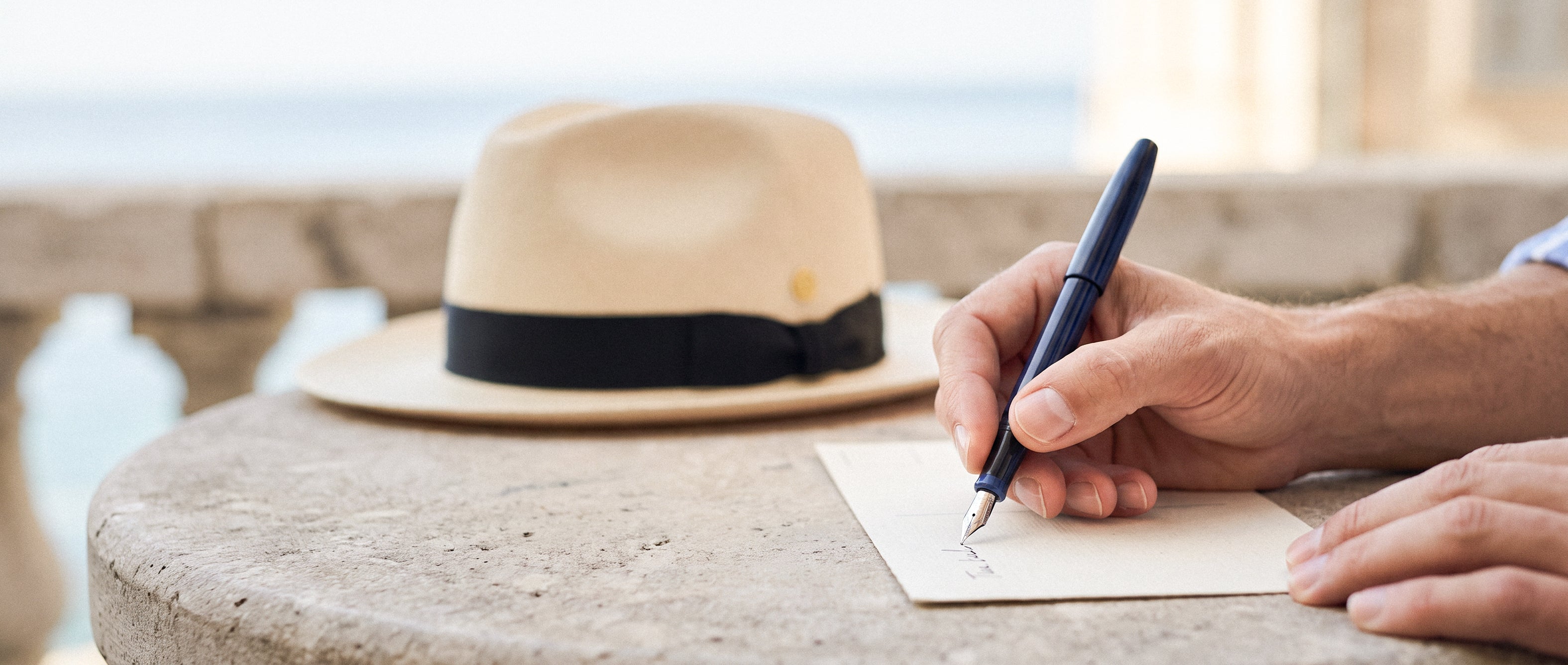
The Panama hat, an icon of summer chic, originated not in Panama, as its name suggests, but in Ecuador. It is there, amidst centuries-old artisan traditions, that master hatters hand-weave the precious fibers of the toquilla palm leaf.
So why the confusion? At the beginning of the 20th century, the Panama Canal was a hub of international trade. Workers, exposed to the blazing sun, wore these airy headgear for protection. In 1906, U.S. President Theodore Roosevelt, photographed wearing a Panama hat during a visit to the construction site, unwittingly popularized this misleading name. The image went viral. The myth was born.
Know-how
Unlike industrial production, the authentic Panama hat is the result of entirely hand-weaving. After harvesting, the leaves of the toquilla palm are cut into thin strips, moistened, and then braided with exquisite precision. The finer the weave, the more supple, soft, and refined the hat.
The natural, subtly ivory color can be bleached for a vibrant finish or tinted in contemporary tones, without ever losing its elegance.
Properties
Panama straw—or toquilla straw—is prized for its exceptional lightness and unrivaled flexibility. It molds perfectly to the shape of the head while allowing the scalp to breathe, providing absolute comfort on the hottest days. Thanks to its dense weave, it naturally resists dirt and retains its shine over time.
Care instructions
Although easy to care for, Panama straw deserves some attention: avoid prolonged exposure to the sun, which can alter the color, and do not wear your hat in the rain – humidity could cause it to lose its shape irreversibly.
Conclusion
A symbol of timeless elegance and exceptional craftsmanship, the Panama hat embodies the perfect blend of lightness, comfort, and sophistication. Whether for a seaside stroll or a formal summer event, it stands out as the essential accessory for a refined silhouette.