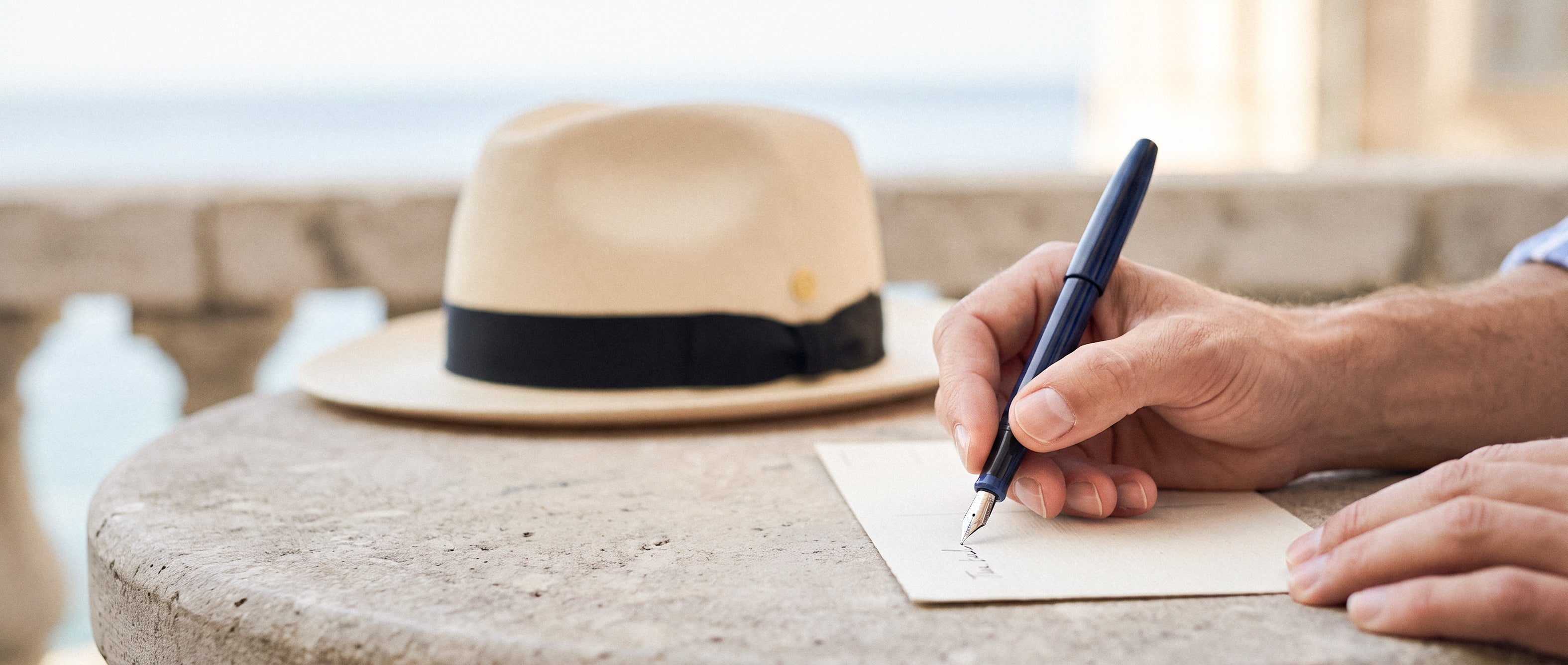

A summer hat is not merely a matter of style. It is also a gesture of protection, comfort and elegance. As temperatures rise and the light grows more intense, the right hat shields your face, eyes, scalp and neck, while lending you an effortlessly refined look.
Yet not all hats protect you from the sun in the same way. The shape, the brim width, the density of the material, the colour, the quality of manufacture and, in some cases, the UV protection factor all play an essential role.
At JJ Hat Center, expert hatters since 1911, we help our customers choose hats that are elegant, comfortable and suited to the season. So which hat blocks the sun best? The answer is clear: a wide-brimmed hat made from a dense, well-structured material generally offers the best sun protection.
The wide-brimmed hat: the best protection from the sun
The hat that protects best from the sun is generally a wide-brimmed hat. The wider the brim, the larger the area of shade it casts around the face, eyes, ears and sometimes the neck.
A wide brim protects better than a classic cap because it covers several angles of exposure. A cap mainly shields the forehead and eyes, but often leaves the ears, the sides of the face and the neck exposed.
For optimal sun protection, choose a hat with a brim of at least 7 to 10 cm. Styles such as the sun hat, the traveller, the wide-brimmed fedora, the Panama hat with a generous brim or certain dense straw models are particularly well suited.
The material is essential
Sun protection does not depend on the shape of the hat alone. The material also plays a major role.
A very open-weave hat, even with a wide brim, will let more light through. Conversely, a tighter, denser and better-woven material will block the sun's rays more effectively.
The most recommended materials for protection from the sun are:
finely woven straw;
quality Panama;
thick cotton;
structured linen;
dense natural fibres;
certain technical fabrics with UV protection.
A light straw hat can be very pleasant in summer, but it is important to check the density of the weave. If you can see a lot of light passing through the material, the protection will be more limited.
When a hat carries a UV certification or a UPF rating, this information is a valuable reference. In the absence of official certification, the brim width, the thickness of the material and the density of the weave remain the best indicators of protection.
Understanding a hat's UV protection factor
When it comes to sun protection, it is important to distinguish between the shade cast by the hat and the actual UV protection of the material. A wide-brimmed hat protects the face mechanically by creating shade, but the ability of the fabric or weave to block ultraviolet rays depends on its density, its composition and, in some cases, a specific treatment.
Some hats are labelled with a UPF rating, which stands for Ultraviolet Protection Factor. This rating measures a textile's ability to block UV rays. The higher the number, the greater the protection. A hat certified UPF 50+, for example, offers very high protection against UV rays.
However, not all hats carry an official UPF certification. This does not mean they offer no protection from the sun, simply that their level of protection has not been measured to this standard. In that case, several factors help you assess the potential protection: the brim width, the thickness of the material, the density of the weave and the amount of light visible through the hat.
For better sun protection, choose:
a wide brim that covers the face, the ears and ideally the neck;
a dense material or a tight weave;
a shape that stays securely in place;
a UPF-certified hat when UV protection is a priority;
a colour and material suited to the heat.
A very open-weave hat, however elegant, lets more light through and therefore offers more limited protection. Conversely, a well-woven, structured hat with good coverage protects more effectively.
A hat remains an excellent ally against the sun, but it does not entirely replace suitable sun protection. For prolonged exposure, we recommend combining it with sunglasses and sunscreen on uncovered areas.
Does a Panama hat protect well from the sun?
Yes, a genuine Panama hat can offer excellent sun protection, especially when it has a dense weave and a sufficiently wide brim.
The Panama is prized for its lightness, breathability and timeless elegance. It is particularly suited to hot days, travel, café terraces, summer strolls and smart seasonal outfits.
However, not all Panamas are equal. A finely woven Panama with a regular structure and a generous brim protects better than a very open model or one with a short brim.
For more complete protection, choose a Panama with a medium or wide brim rather than a very narrow one. If UV protection is an absolute priority, also check whether the model carries a UPF rating or a specific certification.
Fedora, traveller or capeline: which shape should you choose?
Several hat shapes can protect well from the sun, provided they have a suitable brim.
The traveller
The traveller is one of the best choices for elegant, practical sun protection. Its often wider brim protects the face and neck well. It suits travel, days outdoors and relaxed yet polished looks.
The wide-brimmed fedora
The wide-brimmed fedora combines protection and sophistication. It lends a more urban, dressed-up silhouette while providing comfortable shade. It is an excellent choice for anyone who wishes to remain elegant without compromising on protection.
The capeline
The capeline is one of the most protective shapes thanks to its ample brim. It generously shields the face, the shoulders and sometimes the upper chest. It is an ideal choice for the beach, holidays or very sunny days.
The Panama hat
The Panama is a great summer classic. Light, breathable and elegant, it protects well when its brim is wide enough and its weave sufficiently dense.
The cap
The cap is practical and sporty, but it protects less than a hat with a full brim. It mainly covers the forehead and eyes, leaving the ears and neck exposed. For maximum sun protection, a hat remains preferable.
Does the colour of the hat matter?
Colour can influence both comfort and protection. Light colours reflect more light and often remain more pleasant in strong heat. Dark colours may absorb more heat, but depending on the material they can also block light more effectively.
In practice, the density of the fabric or weave matters more than colour alone. A light-coloured but very open-weave hat protects less than a denser hat, even in a darker shade.
For summer, natural tones such as beige, ivory, sand, ecru or off-white are particularly popular. They evoke a light, timeless elegance that is easy to wear.
How can you tell whether a hat protects well from the sun?
A simple test lets you assess a hat's protection: hold it up to a light source. If you can see a lot of light passing through the material, the protection will be lower.
A good sun hat should offer:
a sufficiently wide brim;
a dense material;
a good hold;
coverage around the face;
pleasant comfort in hot weather;
breathability suited to the season;
ideally, a UPF certification when UV protection is an essential criterion.
The aim is to strike the right balance between protection, comfort and style.
The best choice for elegant sun protection
For maximum sun protection, the best choice remains a wide-brimmed hat in a dense material. A capeline, a traveller, a wide-brimmed fedora or a well-woven Panama are all excellent options.
For a more formal look, choose a Panama or a wide-brimmed fedora. For a day of travel or strolling, the traveller is particularly versatile. For the beach or holidays, the capeline offers generous protection and a very elegant silhouette.
If you are looking for measured UV protection, choose a model with a UPF rating, ideally UPF 50+ where this certification is available. If the hat is not certified, choose a tightly woven material with little openness and a sufficiently wide brim.
The right hat should complement your style as well as your way of life. It should be beautiful, comfortable, protective and natural to wear.
Conclusion: the most protective hat is the one that casts the best shade
The hat that blocks the sun best is one that combines a wide brim, a dense material and a shape suited to how you will wear it. When the model carries a UPF rating, this information can also help you choose more precise UV protection.
A quality hat protects better, lasts longer and retains its elegance season after season.
At JJ Hat Center France, we regard the hat as an essential piece of summer: an accessory of style, comfort and protection. Since 1911, our hatmaking expertise has guided us in selecting models designed to complement every silhouette with precision, character and elegance.